Why Lighting Is the Most Important Design Decision in Your Home
- Jun 12
- 4 min read
Of all the decisions we made during our renovation, lighting is the one that changed how our home feels more than any other, and it's the one we almost overlooked entirely.

The Design Lesson We Didn't Fully Appreciate Until We Renovated
It wasn't until we completed our bathroom and hallway that I realised lighting has the ability to completely transform a space. The right lighting can make colours appear richer, soften architectural features, create intimacy and completely change the mood of a room. Equally, poor lighting can make even the most beautifully designed space feel flat and uninviting. While natural light is often dictated by the orientation of your home, artificial lighting is one of the most powerful tools available to create atmosphere.
In our own home, every room has a different relationship with light. Our south-facing kitchen is flooded with sunshine for most of the day, while our bedroom receives beautiful evening light that creates a golden glow at sunset. Other rooms are shaded by the mature trees surrounding our home, requiring a more thoughtful approach to artificial lighting. Over the course of our renovation, we've learned that successful lighting isn't about choosing one beautiful fixture. It's about layering different types of light to create a home that feels comfortable and inviting throughout the day and night.
The Three Types of Lighting Every Room Needs
One of the simplest ways to improve a room is to think about lighting in layers. Interior designers often work with three categories of lighting, and ideally most rooms should incorporate at least two, if not all three.
1. Ambient Lighting
Ambient lighting is your primary source of light. Often referred to as "the big light," it's typically the ceiling fixture that provides general illumination throughout a room. Unfortunately, this is where many homes go wrong.
The issue isn't usually the light fitting itself, it's often the scale, positioning or bulb choice. A beautiful room can instantly feel harsh if it's lit with overly bright, cool-toned bulbs. One of the biggest lessons we learned was not to be afraid of scale. Large statement pendants often create far more impact than small fixtures that disappear into the ceiling.
When choosing ceiling lights, I also love natural materials such as linen, paper and cotton shades. These materials diffuse light beautifully and create a softness that's perfect for romantic interiors.


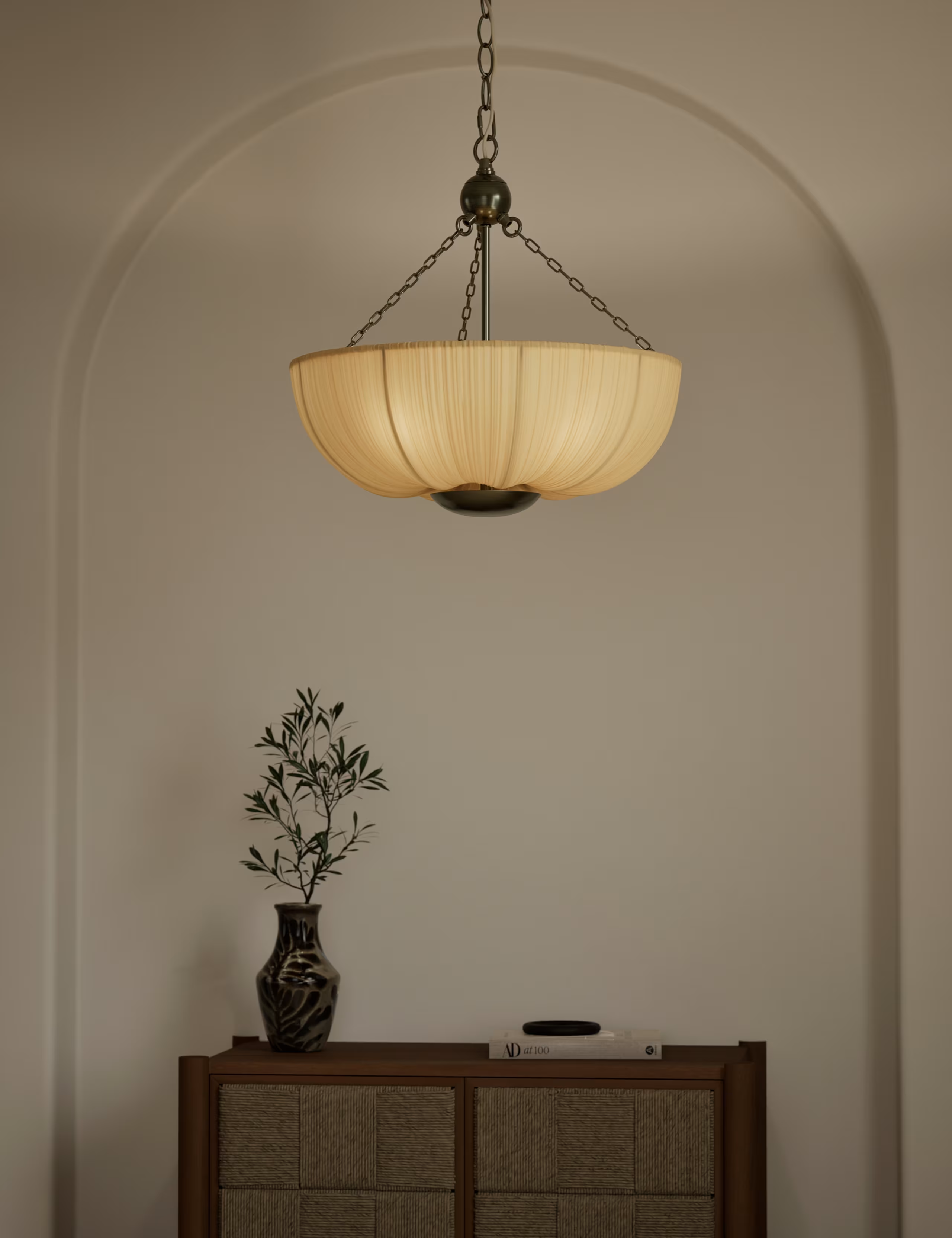





Our Favourite Tip: Hang pendants lower than you think. Whether above a dining table, kitchen island or bed, lowering a light fitting creates intimacy and helps anchor the room visually.
2. Task Lighting
Task lighting is exactly what it sounds like, lighting designed to help you perform a specific activity. Examples include:
Bedside lamps for reading
Kitchen under-cabinet lighting
Desk lamps
Bathroom mirror lighting
Wall sconces beside a bed
Task lighting often goes unnoticed when it's done well, but it plays a huge role in making a home feel functional and comfortable. Good task lighting should support how you actually live in a space.

Our Bedroom Lighting Example
In our bedroom, wall sconces beside the bed allow us to read comfortably without needing to switch on the main ceiling light. The antiqued brass fittings double as a styling detail in their own right — beautiful even when switched off.

Our Kitchen Lighting Example
In the kitchen, carefully positioned strip lights help illuminate the pantry and sink while still maintaining a relaxed atmosphere, working alongside the brass wall sconces either side of the cooker hood for a softer evening glow.
3. Accent Lighting
Accent lighting is where the magic happens. Unlike ambient or task lighting, accent lighting exists primarily to create atmosphere. Think,
Picture lights above artwork
Candles
Decorative table lamps
Wall sconces
Shelf lighting
Uplighting behind plants

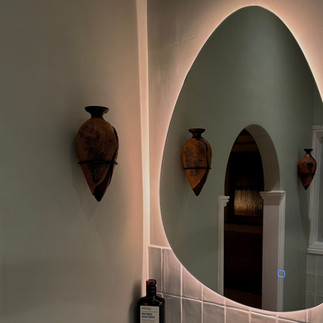


These are often the lights that make a room feel inviting in the evening. In our own home, we rely heavily on accent lighting in the evening. Rather than switching on the ceiling lights, we use lamps, candles and wall lights to create small pools of light throughout the room.
The result feels softer, calmer and infinitely more relaxing.
Why Bulb Temperature Matters
One of the easiest mistakes to make is choosing the wrong bulb. The bulb itself often has a greater impact on atmosphere than the light fitting. For relaxed, romantic interiors, I always recommend lower-temperature bulbs.

Temperature | Effect |
2200K–2700K | A gentle, candlelit glow |
3000K | Brighter and more neutral |
4000K+ | Often too clinical for living spaces |
Almost every bulb in our home falls within the 2200K–2700K range, because it immediately makes rooms feel more comfortable and inviting.
Don't Forget Natural Light
While artificial lighting is incredibly important, natural light should always be maximised wherever possible. Simple changes can make a surprising difference:
Hang curtains high and wide
Use mirrors to reflect light
Keep windows unobstructed
Consider sheer curtains to soften sunlight without blocking it
Some of the most beautiful moments in our home happen when natural and artificial light work together. Evening sunlight filtering through linen curtains, reflected by lamps and candlelight.

Key Takeaways
Maximise natural light wherever possible.
Layer ambient, task and accent lighting throughout every room.
Don't rely solely on ceiling lights.
Choose lower-temperature bulbs (2200K–2700K) to create a relaxed atmosphere.
Use natural materials such as linen, paper and cotton shades to soften light.
Think about how a room needs to function before planning lighting.
Use lamps, wall lights and candles to create mood and atmosphere.
Lighting is often one of the last design decisions people make, but it has the power to completely transform how a home feels. More than paint colours or furniture, it's the element that creates atmosphere, shapes mood and brings a room to life after dark.


Comments